
Like a Phoenix Reborn
The Death and Rebirth of Sarina Wiegman's England

A loose follow-up to Growing Pains: The Search for England 2.0.
Sarina Wiegman arrived at the Lionesses’ managerial post with high expectations.
Though long a top European side, England had never won a major tournament despite coming close several times, and Wiegman was tasked to change that.
The EURO was due to be held in England in summer 2022 — less than a year after her arrival — and though she naturally took some time to settle in, Wiegman had a firm idea of what her starting eleven looked like by the time the tournament kicked off.
Manchester United’s Mary Earps was given the nod in goal, with a backline of Rachel Daly, Leah Williamson, Millie Bright and Lucy Bronze.
Long-time midfield partners Keira Walsh and Georgia Stanway took their place in front of the backline and the final spot of the midfield went to Fran Kirby — one of England’s star players.
Veteran striker Ellen White led the line as she’d done for so many years for England, while Lauren Hemp and Beth Mead started on the wings.
England 1.0 had taken shape, and it would go on to win the tournament in style, romping past Norway and Sweden while grinding out hard-fought wins against Spain and Germany.
Their legacy, however, was more than just seven letters on a trophy. It unleashed a wave of euphoria and enthusiasm across the country and kicked off an explosive growth in the game, with the WSL benefitting massively.
But all good things must end, and having lifted that trophy in front of 87,00 people at Wembley, Ellen White called time on her playing career.
Though she was a legend and the Lionesses’ all-time top goalscorer, White was 33 and her influence was clearly on the wane. The transition to life after her was a relatively smooth one, with Daly — a striker by trade — moving up front and Alex Greenwood coming in at left back.
As the new season arrived, Wiegman’s side continued firing on all cylinders, memorably beating the USA in October at Wembley. England had announced its arrival on the superpower block, and with the World Cup less than a year away, there was little doubt that the Lionesses were heading to Australia as favorites.
Then Mead tore her ACL, and Wiegman’s England was rudely knocked off course.
Mead was, of course, the standout player at the EURO and without a doubt the star of that England side. But Wiegman lost more than just a good player — she lost a vital cog of her machine.
Whereas Hemp would hug the touchline, receive the ball to feet and from there look to beat her marker on the outside and put in crosses, Mead would come inside and attack the box aggressively, playing like a second striker to give England’s creative players another target in behind.
With Mead out injured, Chloe Kelly came in as Hemp’s opposite number.
Kelly, however, was decidedly more like Hemp — a touchline winger who liked to receive the ball to feet and create rather than an inside forward who thrived in attacking the box. With both wingers now holding width, Mead’s dynamism and output had to come from elsewhere.
But where?
Wiegman never quite figured out the answer, and with the second striker dynamic now moribund, the lone center forward predictably found themselves badly lacking support.
The Lionesses once had a vicious right hook.
All they had now was their jab.
By the time their plane set off for Australia, England would lose two more starters.
Fran Kirby had long suffered fitness issues and only made the EURO squad in the nick of time. Though she had a good tournament and returned to Chelsea in top form, she would suffer more fitness issues throughout the 22/23 season and miss out on the World Cup after a knee operation.
Ella Toone had impressed at the EURO as a super sub and came into the lineup for the Kirby, but as was the case with Kelly, Toone was a mismatch for the role she was asked to step into.
Kirby is a trequartista — a number 10 with a magical touch, as adept at converting chances as she is at creating them. Toone is a raumdeuter — a space interpreter who lacks Kirby’s silk and flair but is blessed with a remarkable ability to sniff out that pocket of space in the final third where she can do the most damage.
For Kirby, the left side of the midfield in England’s 4–3–3 is a perfect fit for her, allowing her to cut inside onto her right foot and face the entire pitch, giving her access to all the angles to either pick out that pass or attempt the shot.
For Toone, however, it is a match made in hell.
The angles on the left are almost infinite, but it is the narrower, more direct angles on the right that allow Toone to play her natural game, receiving high and facing forward so she can thread the pass or fire off the shot before defenders have the time to close in.
Toone is not Kirby, and stuck on the wrong side, can’t be herself either, and it was as if England lost them both.
Leah Williamson — England’s captain — was also afflicted by a knee injury, tearing her ACL just three months before the World Cup. But in her case, the Lionesses have a ready-made replacement in Alex Greenwood—a progressive center back who is a natural-born leader.
But if Greenwood is replacing Williamson, then who is replacing Daly?
Jess Carter, Niamh Charles and Esme Morgan were the options, but they were all relatively young and had little senior international experience, if any.
And to add to England’s defensive woes, Millie Bright — the other half of that EURO-winning center back duo — was troubled by her own knee injury and would only just make England’s opening game with Haiti.
In the end, the sudden frailty of her defense persuaded Wiegman to give the nod to Carter — the most defensively sound of the trio. Given the circumstances, it was an eminently logical decision.
But the same could not be said for the decision to keep Greenwood on the left and start Carter next to Bright.
With Bronze playing in her usual, adventurous manner and Greenwood asked to do the same, England’s defense was badly exposed. Bright was predictably lacking sharpness and Haiti targeted her heavily, with quick breaks down England’s right to exploit the space in behind an aging Bronze.
In the end, Carter repaid Wiegman’s trust and singlehandedly plugged the gaping hole in England’s defense, coming across to the right whenever Bronze and Bright were caught out to deny Haiti a straight shot at Earps’ goal.
Carter’s heroics, a penalty from the ever-so-reliable Stanway and a considerable amount of luck powered England through their opening fixture, but it was clear for all to see that the Lionesses were a long way from the well-oiled machine that’d won the EURO a year ago.
Wiegman needed an ace in the hole and luckily for her, she did not have to look far to find it.
“Not since Kelly Smith have I been as excited by a player as I am by Lauren James in the women’s game… James has natural ability and is incredibly graceful in how she moves the ball for someone so quick and powerful. She effortlessly glides with the ball and I have not seen another player do this. I also enjoy how she can manipulate the ball and her ability to finish with either foot. The scary thing is that she is so young and has lots of time to grow and develop.”¹
Those were the words Lioness-turned-pundit Karen Carney penned in a glowing article for the Guardian on Chelsea forward Lauren James in March 2023.
Few would dispute them.
Long recognized as one of the most promising young players in the country, James had her breakout season in the 22/23 campaign, netting five goals and two assists in eighteen WSL games.
Chelsea ended the season with both the WSL title and the FA Cup, and James was rewarded with the PFA Women’s Young Player of the Year award as well as her first senior international cap in September 2022.
With the Lionesses’ on-pitch struggles clear for all to see, calls had long been made for James to be given a chance.
But Wiegman resisted.
After all, she knew full well that James was only 21 years old and that having her country’s World Cup hopes thrust upon her shoulders could just as easily make or break the young star.
She was the future and the future had to be nurtured, not rushed.
But with the next game fast approaching and the Lionesses’ performance showing few signs of improvement, the future could no longer wait. Her team needed a shot in the arm and Wiegman finally rolled the dice on her young number 7.
The die is cast, but where will it fall?
The intuitive option would have been a straight swap between James and Toone for Kirby’s position as the left-sided attacking midfielder.
Kirby was a generational talent blessed with a 10’s elegance and a 9’s ruthlessness and England could only ever try to cope without her, but if such thing as a like-for-like replacement existed, it would have been her club teammate.
Whereas Toone was a square peg asked to fit into a round hole, James had all the makings of a trequartista with the technical ability to keep the ball glued to her feet, the agility to wiggle away from defenders, the two-footedness to dribble in every direction and an assuredness of her own ability.
The Lionesses were missing that spark of magic, and James had plenty of her own to offer.
Still, Wiegman hesitated.
It’s pressure enough to make your first competitive senior international start in a must-win game at the World Cup, but to have to fill Fran Kirby’s shoes on top of that?
“I urge everybody to be calm with her. It’s important for us to nurture her in the way we do, but also without massive pressures and expectations, which I know is hard to avoid.”²
Her club manager Emma Hayes had commented at the beginning of the 22/23 season, and it was a sentiment that Wiegman shared fully.
Hayes primarily used James as the nominal right winger that season, starting out wide initially but with the freedom to come inside into the half-space like a right-sided attacking midfielder while the right back pushed on and provided width.
Wiegman asked James to do the same from the left, and Daly was moved back to left back to accommodate her.
It seemed like a criminal waste of talent to even contemplate playing a thirty-goals-a-season striker in defense, but Daly had performed there at the EURO and Wiegman had a habit of falling back on tried-and-trusted options when her back was against the wall.
The stage was set, and James delivered her lines with perfection, getting on the scoresheet just six minutes in with a well-struck effort from the edge of the box.
Not a bad way to introduce yourself to the world.
James’ goal gave England belief, and for the first half an hour of that game, it was as if the Lionesses were their old, invincible selves again.
Then it all went wrong.
When Keira Walsh went down in the 37th minute, clutching her knee in agony, England lost the one player they could not afford to lose.
“Everything from Keira, there wasn’t Plan B. I dread to think we’d ever have to lose Keira… all our play came through her, she was like that cog that just everything moved through her.”
The gloom in Ellen White’s half-time remarks was impossible to miss.
Walsh was the beating heart of that EURO-winning side, the regista who made Wiegman’s expansive, free-flowing football possible. (I’ve written about her importance to England in a previous article, link here)
If Wiegman’s England was hamstrung by the loss of Mead and Kirby, then the loss of Walsh shattered its very foundation.
The Lionesses had limped on without Mead and Kirby, but with Walsh out too, even limping became impossible.
England 1.0 died a slow, torturous death, and Walsh’s injury was the final nail in the coffin.
With Walsh sidelined, nothing was holding Wiegman back anymore. She had built the EURO-winning side, and a year after that glorious afternoon at Wembley, the Dutch mastermind took a sledgehammer to her creation and then pieced it back together.
Lauren James had been tentatively introduced in the Denmark game. Wiegman now cast off her apprehensions and placed the Chelsea forward front and center in the new project, coming in for Toone as the left-sided attacking midfielder.
It was seemingly impossible to replicate the second striker dynamic without Mead, so Wiegman flipped the script and moved to a front two of Lauren Hemp and Alessia Russo, both given the freedom to roam, dropping off and drifting wide to get on the ball and run at defenders.
Both Greenwood and Bright were undroppable but not starting Carter was out of the question as well with the need to cover for Bronze, so Wiegman simply started all of them together in a back three, with Daly and Bronze bombing forward as wing backs.
And with Katie Zelem being given the nod to take Walsh’s place at the base of the midfield, Wiegman had her starting eleven for the final group stage game against China.
What unfolded was spectacular.
Just four minutes in, Russo gave England the lead with a shot from just inside the box. Twenty-two minutes later, Hemp burst past China’s entire backline and slotted the ball into the same bottom left corner to make it 2–0.
The star of the evening, however, was undeniably James, opening her accounts with an exquisite goal from the edge of the box in the 41st minute before doing it again nine minutes later.
Although her second goal was controversially ruled out, the Lionesses’ number 7 got her brace still in the 65th minute, making a poacher-like far post run to meet Carter’s cross and calmly sending her shot into the bottom right corner.
Her hat-trick of assists — an extraordinary achievement in its own right — was merely the cherry on top.
It was a world-class performance from a world-class talent.
Coming up against a narrow 4–4–2 block, the 3–5–2 gave England numerical superiority in every phase of play.
The narrow positioning and standoff approach of China’s front two gave Greenwood all the time and space in the world to receive and play her famous long balls forward from her wide left position.
Stanway was noticeably deeper, often positioning herself next to Zelem as the second pivot to match China’s midfield two, freeing up James to roam in the gap between China’s midfield and defense.
And it was from this gap that she proved so devastating, scoring twice from range and releasing Russo, Hemp and Kelly in behind for a hat-trick of assists.
The wing backs bombed on and spent more time in the opposition third than their own, with Bronze in particular given full attacking license.
The narrowness of China’s back four meant that either Daly or Bronze would always be in acres of space to receive the switch while the forwards took turns exploiting the gaps that emerged as China’s defensive block shuffled back and forth.
England’s creative players had been hampered by a lack of runners in behind ever since Mead’s injury, but with the extra center forward up front and the wing backs attacking the far posts, there were ample targets for those balls into the box.
The decision to deploy a Hemp-Russo front two in particular was a stroke of genius. Both forwards were excellent dribblers and major threats in transition, with Hemp blessed with devastating pace and explosiveness and Russo unassailable in the air.
Either of them would drift out wide to get on the ball and force the one-on-one, while the other would remain central to both pin their center back and take advantage of crosses and through balls.
Already without four of her starters from the EURO, Wiegman was dealt yet another body blow with the loss of Walsh. But the Dutch mastermind proved her mettle yet again with a 3–5–2 that both resolved the problems that’d long ailed her side and got the most out of her new crop of players.
Three wins from three games, England finished atop Group D to qualify for the knockout rounds.
And in the blaze of a glorious 6–1 victory, England 2.0 was born.
The new era of good feelings did not last long.
Many were expecting England to ease past Nigeria in the round of 16. After all, the Lionesses had finally hit their stride again with the change in formation, and their newfound confidence was boosted even further with Walsh’s timely return.
But there is a fine line between confidence and complacency.
The players could be trusted to stay on the right side of that line, but the supporters would do well to remember that many of them had made the same assumption about Haiti.
Haiti did not follow the script those optimistic Lionesses fans had written in their heads, and Nigeria was not going to either.
It was the biggest stage in the world, and no one was going out without a fight.
And fight Nigeria did.
With a week to study England’s new 3–5–2, the Super Falcons came into the fixture well-prepared.
China’s rigid, narrow 4–4–2 block struggled badly so Nigeria opted for a flexible defensive shape. A 4–3–3 was often used during the first phase of England’s buildup with a first line of three to match England’s back three, denying Greenwood the space to carry the ball forward and play progressive passes as she had done against the Asian champions.
The 4–3–3 would morph into a 4–4–2/4–2–3–1 higher up the pitch with an emphasis on denying England avenues for central progression. Carter was targeted heavily by Nigeria’s press and often struggled to cope and while Bright fared somewhat better, the Lionesses were almost entirely reliant on Greenwood to bring the ball out.
In a back three, the wing backs are tasked with dual responsibilities — to act as full backs in defense and wingers in attack, and much can be gleaned from simply observing how much of the game the wing backs spent in the opposition third, and how much of the game they spent pinned in their own third.
If the wing backs spent most of the game in the opposition third, then the performance was likely a dominant one.
But if the wing backs spent most of the game struggling to get out of their own third, then the team as a whole likely struggled.
Daly and Bronze had both fared well against China, but against Nigeria, they struggled on both ends of the pitch.
Whenever they were higher, Nigeria marked them to ensure they were not left in space to receive the switch as they’d done against China, with both wingers tracking back diligently.
And whenever they dropped deeper, Nigeria’s full backs Ashleigh Plumptre and Michelle Alozie jumped on them to prevent them from carrying the ball forward and acting as attacking outlets.
Bronze’s athletic decline was common knowledge by then and Nigeria repeatedly targeted the space in behind her, with left winger Rasheedat Ajibade wreaking havoc down England’s right and Plumptre happily joining the attack to overload the Lionesses’ defense.
Hemp and Russo both pulled out wide and looked to receive closer to the touchline, but Nigeria’s center backs Blessing Demehin and Osinachi Ohale followed them out wide to deny them the space to turn.
And with the wing backs struggling to get up the pitch and Nigeria willing to commit bodies out wide, Hemp and Russo often found themselves having to hold off multiple defenders on the touchline with their backs to goal, with no teammates nearby for support and no space to dribble into.
James similarly struggled.
Stanway had sat deeper against China to compensate for Walsh’s absence, and James was able to drift central into the 10 position. With Walsh returning, however, Stanway took up her customary position higher in the right half-space, and James was mostly confined to the left.
Nigeria’s right-sided defensive midfielder Halimatu Ayinde and Alozie worked together to lock down that side of the pitch, and James was rarely able to receive the ball facing forward.
The Chelsea forward had punished China in spectacular fashion for affording her so much space and Nigeria manager Randy Waldrum had no intention of repeating that mistake.
A player of her caliber only needed a split second and half an inch of space to change the game and the Super Falcons took care to ensure she had neither.
James was frustrated throughout the game, and it reached the boiling point in the 84th minute when she tried to dribble past Alozie, only to have the ball poked away from her.
Alozie lost her balance during the tackle and fell to the ground, and James subsequently tripped over her and fell as well. England’s number 7 appealed for the foul, and when it was not given, lost her head.
In a moment of madness, James stamped on Alozie as she got up and was duly sent off.
James had been a star in the making for years, and after an impressive debut against Denmark and a breathtaking performance against China, it looked to all the world like her moment of stardom had finally arrived.
But with a red card in the round of 16 and an expected three-game suspension for violent conduct, James’ World Cup was for all intents and purposes, over.
She had a long and likely trophy-laden international career ahead of her, but for the moment, it would have to wait.
Down to ten, the Lionesses strapped down for the storm.
The 3–5–2 made way for a makeshift 4–4–1, with Russo as the lone forward, Daly and Hemp taking up the wide positions and Carter shuffling out to left back.
Nigeria had been the better side throughout the contest and it quickly became clear that Wiegman’s plan was to hold out for the shootout and win the game on penalties.
It was, of course, a gamble, but one that had a good chance of paying off considering that Wiegman could call upon a number of excellent penalty takers. But first, England would have to hang on for the rest of normal time and thirty minutes of extra time.
Ironically, going down to ten led to England’s best spell of the game.
Nigeria had gone man-to-man with England’s back three and the shift to back four gave England a spare player in their first line. Alongside Stanway’s deeper positioning, the Lionesses effectively had two extra players in buildup.
The narrowness of the makeshift 4–4–1 brought the players closer together while naturally placing a greater emphasis on playing through the middle, and England had more avenues for central progression.
Plumptre and Alozie had happily jumped on England’s wing backs, but they became less willing to back up the press as the deeper positioning of the full backs made jumping riskier, and the Lionesses suddenly found space opening up for them.
The Super Falcons had all the makings of giant slayers and thrived in their role as the underdogs while England struggled to impose themselves on the game.
After going down to ten, however, England undeniably became the underdogs of the contest, and the sudden shift in dynamic freed them from the impossibly high expectations that’d been placed on them after the China game.
In the end, normal time passed with the scoreline remaining 0–0, and Nigeria began asserting themselves once again in extra time. The Super Falcons created several chances and Bronze in particular struggled, nearly giving away a penalty just two minutes in.
Nevertheless, Nigeria found themselves lacking clinicality in front of goal, and aided by tenacious defending and no small amount of lack, England managed to weather the storm.
Wiegman had gotten her shootout, but did her side have what it took to win it?
The first to step up was Stanway — the unbeatable penalty taker with a perfect record from the spot for England.
She had scored the winning penalty in the opening game against Haiti, and even more memorably, the winning penalty for Bayern Munich in their Frauen-Bundesliga clash with Wolfsburg back in March, effectively sealing the title for the Bavarians.
It was inevitable that Stanway would score, yet inevitable failed to happen.
Stanway struck the ball and promptly put it wide off goal.
England had hit rock bottom and proceeded to sink even further.
Nigeria were on the cusp of winning their first-ever World Cup knockout round game, but the football gods had other plans.
The slate was wiped clean when Desire Oparanozie stepped up for Nigeria and put it wide left off the goal just like Stanway, and Bethany England fired the ball into the middle to put the Lionesses ahead through the remainder of the shootout.
A year ago, Chloe Kelly scored the winning goal to help England win their first-ever major trophy.
A year later, she scored the winning goal to put her country through to the World Cup quarter-finals.
The 2023 World Cup saw many upsets, the most sensational of which was dealt by Colombia, beating the behemoth Germany 2–1 en route to topping Group H.
And now, England were up against them in the quarter-finals.
Nigeria had pushed the European champions to the very brink.
Would Colombia strike the death blow?
Many Lionesses fans — now overtaken by pessimism — certainly thought so.
Their new system was found out by Nigeria, their new star was suspended, and Colombia was a dangerous side with dangerous players.
The most dangerous of them was, of course, Linda Caicedo.
Long recognized as one of the most exciting young players in the world, Caicedo won the 2022 Copa América Femenina Golden Ball at just seventeen years of age and was signed by Real Madrid the following February.
Madrid was, of course, a popular destination for South American players, with fellow Colombian Leicy Santos plying her trade at Atletico Madrid and Venezuela captain Deyna Castellanos playing there too until joining Manchester City, and Caicedo announced herself on the world stage during the game against Germany, dancing away from two defenders before drilling the ball into the top right corner with an inch-perfect finish.
In their number 18, Colombia had a devastating dribbler with the pace and flair to leave defenders on the ground and an innate ability to find the back of the net, and the matchup between her and an aging Bronze promised to be a troublesome one for England.
As expected, Colombia looked to target England’s right.
Their right winger Catalina Usme tracked back diligently whenever Daly pushed on, but Caicedo was given the freedom to stay high and position herself in the space in behind Bronze.
As such, their 4–2–3–1 often morphed into a 4–3–1–2 in defense, with center forward Mayra Ramírez shuffling to the right to cover Greenwood and Santos sitting on Walsh.
Bright was allowed time on the ball and often went long, with either Russo or Bronze as the target. Colombia contested those long balls forward fiercely and applied heavy pressure on Russo and Hemp whenever they dropped to get on the ball.
The game that unfolded was chaotic and both sides looked to get the ball forward quickly. With Bronze pushing on, Colombia made a point of getting the ball to Caicedo, but Wiegman was nothing if not scrupulous and took steps to counter this.
Carter had been brought into the side largely thanks to her ability to defend out wide, and Wiegman instructed her to mark Caicedo tightly, with teammates coming across to double up on the Colombia number 18 if necessary.
Having cut her teeth battling top wingers across England and Europe for Chelsea, Carter was without a doubt England’s best one-on-one defender and held her own against the immensely talented but still-young Caicedo.
With Carter largely nullifying Colombia’s most dangerous attacker, England generally fared better in these open-ended exchanges. Yet the Lionesses were no closer to taking the lead.
Toone had come back into the side but she was still a fish out of the water on the left, and while Bronze was often able to receive the switch high on the right, it was painfully obvious that she no longer had the explosiveness to burst past defenders. England’s midfield had few touches and the center forwards found chances wanting.
In the end, it was Leicy Santos — Colombia’s other star forward — who drew the first blood, receiving on the edge of the box and bending the ball past Earps into the far post with an exquisite lob.
44 minutes in, Colombia had taken the lead.
But the game was far from over.
England were not as mighty as they once were, but they were still blessed with quality players all over the pitch.
They had battled like hell to overcome Nigeria, and going behind injected newfound urgency into their actions.
Whereas Colombia withdrew into their own third and sought to see out the half, England pushed for the equalizer. Space began to open up for the Lionesses and momentum shifted ever so subtly.
The six minutes of stoppage time saw England rounding on Colombia furiously, and a switch from Walsh found Bronze inside the box. Bronze nodded the ball on for Russo, but neither the England forward nor the defenders could get the ball under control.
And in the chaos that ensued, Hemp found herself facing an open goal with the ball right in front of her.
She was not about to miss.
Seconds before the end of the first half, England were level.
The first 45 minutes saw the two sides locked in a stalemate until it was broken by a moment of brilliance; the second half played out much the same, only this time, it was England that struck.
A switch from Greenwood in the 63rd minute found Stanway free on the right, and her through ball bounced off the heel of Daniela Arias straight into Russo’s path. The Arsenal forward latched onto the ball and drilled it into the far post.
And just like that, England were ahead.
Lauren James was supposed to be the star of England 2.0 but it was Lauren Hemp and Alessia Russo who carried it forward, dragging the Lionesses into the semi-finals with a tenacious performance.
Awaiting England was their greatest test yet.
Nigeria and Colombia had both given the Lionesses a battle — Australia would bring the war to them.
Backed by a sport-crazed nation of 26 million, Tony Gustavsson’s side had topped Group B after dealing Olympic champions Canada a 4–0 shellacking and knocked out France 7–6 in the shootout to book their first-ever World Cup semi-final appearance.
Japan’s elimination in the quarter-final meant that a country would win the World Cup for the first time in 2023, and the Matildas had every confidence that they would be the ones to make history.
After all, England had done it on home soil just the summer before.
Who was to say they couldn’t do it too?
The Matildas and the Lionesses were intimately familiar with each other, with the former possessing a significant WSL contingent. The most notable of them was, of course, their captain and all-time top goalscorer Sam Kerr of Chelsea, having made a timely return from injury in the quarter-final.
Witnessed by some 75,000 people at Stadium Australia, the two sides met in a titanic clash.
The Matildas set up in their usual 4–4–2 with Kerr and Mary Fowler leading the line. Caitlin Foord and Hayley Raso took up the wide positions, supported by two attacking full backs in Steph Catley and Ellie Carpenter, while Kyra Cooney-Cross and Katrina Gorry manned the midfield.
Perhaps taking inspiration from Nigeria, Gustavsson opted for a flexible defensive shape. Whenever England looked to begin buildup, Raso would join Kerr and Fowler in a narrow front three. Kerr and Raso covered Carter and Greenwood while Fowler sat on Walsh and Foord stayed deeper to compensate for England’s +1 in the midfield, thus giving Australia a 4–3–3.
Rather than pressing England’s center backs, Australia sat off and looked to block their passing lanes into the midfield, thereby forcing them into going long and hopefully leading to a turnover.
And this was where the Matildas truly thrived.
Cooney-Cross and Gorry both possessed the vision and passing range to get the ball up the pitch quickly, while Kerr was one of the most lethal strikers in the world and a menace in transition. Foord and Raso could both stretch play and beat defenders, while Catley and Carpenter marauded forward to support them.
At the center of the Matildas’ counterattacking machine was Fowler, the young Man City forward who would start alongside Kerr in the front two but drop off and roam like a false 9, linking up with the midfield and providing that spark of creativity in the final third.
If Fowler were to be nullified, then the Matildas would find it infinitely more difficult to unleash all that firepower at their disposal.
Walsh marked Fowler closely, and England congested the middle of the pitch with bodies to crowd out both her and the central midfielders. The Man City forward often drifted out wide in search of space, but the Lionesses took care to double up on her with either the wing back jumping or the center forwards tracking back.
With Australia sat in a narrow block, space was to be found on the outside, and England once again looked to use their wing backs as outlets. The center backs would often play the long diagonal into the wing backs, and the near-side center forward and central midfielder would both shuffle across to create a wide overload, forcing the Matildas to commit bodies out wide.
Once Australia’s block has been drawn across, the far-side wing back would be free to receive the switch and attack from there.
The narrow positioning of Foord and Raso successfully cut off access to England’s midfield, but it also opened up space outside Australia’s block for Daly and Bronze to receive. And with England utilizing a front two, Catley and Carpenter could scarcely step out to press the wing backs without leaving their center backs exposed.
Yet though England were able to put Australia’s defense in dangerous situations, they could rarely turn these situations into meaningful chances.
Pep Guardiola had a simple dictum — always have wide attackers who can reliably beat defenders to take advantage of switches.
With Daly and Bronze as the wide attackers, however, England simply could not capitalize on these switches. Neither Daly nor Bronze possessed the raw pace to burst past defenders and either have a shot on goal or put in crosses, and though they were able to receive in good positions, they simply couldn’t take advantage of them.
If England 1.0 was like that all-conquering army of Alexander, then England 2.0 resembled more closely that of his successors. They still possessed the terrifying masses of phalanx infantry to pin the opposition in place, but they no longer had the crucial heavy cavalry to deliver the killing blow.
Yet Gustavsson was not willing to let things be.
A blunt sword cannot pierce armor, but enough blows will bludgeon the wearer to death all the same.
Who was to say one of those wide overloads wouldn’t lead to goal?
The Matildas now returned to a 4–4–2 with Foord and Raso both dropping off to better cover England’s wing backs while Kerr and Fowler positioned themselves on either side of Walsh.
The tweak was meant to limit England’s access to their wing backs, but if anything, it made it even easier for the Lionesses to play down the flanks.
To ensure Cooney-Cross and Gorry were not outnumbered by England’s midfield three, Foord and Raso had to position themselves narrowly to help cover England’s central midfielders, which only opened up even more space for Daly and Bronze.
And with Kerr and Fowler asked to cover England’s back three as well as Walsh, the Lionesses effectively had a +2 in buildup and were able to progress play almost freely.
England’s ability to access their wing backs and overload the wide areas was unhampered, and one of those overloads led to the opener, with Toone receiving the cutback from Russo to fire the ball into the top right corner.
The Matildas were down, but they were certainly not out.
The ability to change the game in the blink of an eye — that’s what it means to be a world-class player.
And the Matildas had such a player in Sam Kerr.
Though England continued to dominate the ball into the second half, their inability to convert possession into clear-cut chances continued as well.
In the end, it took a blink of an eye for Kerr to turn the game on its head, singlehandedly driving into England’s third and launching the ball from 30 yards out straight into the goal in the 63rd minute.
The momentum had shifted, and Australia were now on the front foot.
The Lionesses had been hampered by the same lack of wide threat against Colombia and it was the tenacity and brilliance of their center forwards that powered them through.
Against a home side reinvigorated by the equalizer, it was the center forwards who once again came through for England.
Just eight minutes after Kerr scored the equalizer, Hemp latched onto a long ball from Bright and regained England their lead with an emphatic finish.
Fifteen minutes after that, her through ball found Russo who calmly slotted the ball into the far post as she’d done against Colombia.
Though the Matildas fought on, Russo’s goal had sealed their fate.
A year ago, Hemp and Russo were promising young players who played important but supporting roles during England’s march to glory.
A year later, they had come into their own and led a Lionesses side hampered by injuries to their first-ever World Cup final.
If this was a coming-of-age story, then beating Australia would have been the perfect ending.
But this was not, and getting past Australia was but the prelude to the third act.
Australia had been formidable, but if England were to claim the ultimate prize, then they had to beat an even more formidable opponent in Spain.
Spain had given England their toughest game at the EURO and the Lionesses only made it through by the skin of their teeth.
A year on, the balance of power had shifted distressingly in the Spaniards’ favor with the Lionesses missing multiple key players and their opponents bolstered by Alexia Putellas’ return from long-term injury.
Yet as the final approached, the story was as much about those who would take the field as those who would not.
Putellas returned to the national team for the World Cup, but twelve members of Spain’s EURO side — including Mapi León and Patri Guijarro — did not, as the conflict between the players and the federation continued.
Jorge Vilda had come across as a man hopelessly out of his depth on the sidelines as England made a late comeback to eliminate Spain and visibly gave up when Toone’s equalizer turned the game on its head.
Spain’s men’s side had a World Cup and two EURO trophies to show for their golden generation, yet their women’s side had never even won a knockout game at a major tournament. That alone would be reason enough to revolt, yet the prospect of having the best talent pool in the world wasted by an incompetent manager was merely the tip of the iceberg in a tenure marred with allegations of abuse and mistreatment.
However, Vilda retained the support of the federation, particularly that of its head, Luis Rubiales, and with few exceptions, the fifteen players who openly revolted were either frozen out or refused to be called up for the World Cup.
Spain’s run to the final had seemingly vindicated a federation that not only condoned the mistreatment of players, but seemed to take pride in it, and as the two sides met at Stadium Australia, far more was at stake than just a trophy.
The Lionesses remained understrength, but they received a rare piece of good news when Lauren James was only suspended for two games, making her available for the final.
Yet the good news also represented a headache for Wiegman.
Does she bring James back into the side or stick with Toone?
From a purely tactical perspective, there was little question that James should come back in for Toone.
The latter’s goal against Australia notwithstanding, the tactical calculus was exactly the same.
Toone was a brilliant player, but much of that brilliance was accessible only from the right. She would never be more than a shadow of her best self on the left and would offer little aside from her runs into the box and defensive work rate.
James, on the other hand, offered the same magic Kirby did and would inject some much-needed technical ability into England’s midfield against an opponent unrivaled in that department.
Yet Toone did score the all-important opener against Australia.
For all the comparisons they get, football is not chess.
It is not a game played on a board with pieces, but one that is played by human beings. And if James — who put her team in a difficult situation against Nigeria with her dismissal — was to come straight back in for Toone after the latter had come through for the team massively against Australia, then it was difficult to guess how those human beings in the dressing room would react.
From a tactical point of view, James was the obvious choice. Yet from a man management point of view, it was much safer to just stick with Toone.
How to weigh between them?
Supporters and pundits alike all had their views, but it was a decision for Sarina Wiegman and Sarina Wiegman alone.
And Sarina Wiegman had a habit of falling back on tried-and-trusted options when her back was against the wall.
Up against a side undeniably more talented than her own with the soul of the sport itself seemingly at stake, Wiegman decided to keep faith with Toone.
And so the same side that’d knocked out Australia took the field for the final.
England 1.0 had won a major tournament — could England 2.0 do the same?
The Lionesses came out flying and created a number of chances, but it soon became clear that they were outmatched.
Aitana Bonmatí, Spain’s star player, started as the right 8 as expected, but she was to be partnered by Jenni Hermoso rather than Putellas, while Salma Paralluelo took Hermoso’s usual place up front.
Mariona Caldentey and Alba Redondo started on the wings, supported by the adventurous full back duo Olga Carmona and Ona Batlle while Teresa Abelleira anchored the midfield.
This unexpected change in personnel was to confound England for the better part of the first half.
Both Paralluelo and Caldentey drifted into the left half-space with the former remaining high and the latter dropping to aid ball progression.
This dual movement left Jess Carter between a rock and a hard place.
If Carter stayed deeper to mark Paralluelo, then Spain would have a +1 in the midfield. Walsh would be forced to engage either Caldentey or Hermoso to prevent Spain from overloading England’s right, which would only free up Bonmatí to receive the switch on the other side.
But if Carter stepped out to mark Caldentey, then a gap would suddenly open up in England’s defense. Bright would be forced to shuffle across to mark Paralluelo, and Greenwood would be left on her own opposing both Bonmatí and Redondo.
A dilemma for which England had no answer.
Carter chose to follow Caldentey at first, but a switch to Batlle and a quick break down the right convinced her it was much safer to just stay with Paralluelo.
The Spanish players were all technically gifted and remained close to each other to allow quick combinations, and this meant that they could be counted on to play through England’s block even without the +1.
As such, Carter’s decision was not an unsound one, but it effectively conceded control of the game to Spain.
The Lionesses were left on the back foot from the get-go and had to resort to counterattacks, but the close proximity of the Spanish players also placed them in prime counter-pressing positions.
The midfield and the forwards were cut off from each other while the aggressiveness of the Spanish full backs did much to pin the wing backs deep, Daly in particular. Disjointed and unable to get out, England could neither keep the ball nor win it back, and most of their possession simply led to quick turnovers.
It was utter dominance, and Carmona ruthlessly exploited a mistake from Bronze to put Spain ahead.
Once again, Sarina Wiegman found her back against the wall.
And once again, she fell back on tried-and-trusted options.
The 3–5–2 was discarded for the old 4–3–3, and both Chloe Kelly — who’d come through in the EURO final — and Lauren James — who’d shined earlier in the tournament — were brought on, replacing Russo and Daly.
Hemp was to be the lone center forward with James and Kelly on the wings, while Carter was shifted to left back, and the change in formation successfully wrestled control of the game from Spain.
Caldentey dropping had created a central overload that England simply could not cope with in the first half, and Bronze was instructed to stay tight on her after the restart, following her deep to nullify Spain’s +1 in buildup.
Paralluelo continued to drift into the left half-space and Bright followed her out wide, marking her closely to lock down the space behind Bronze.
Carmona and Batlle had wreaked havoc down England’s flanks and the introduction of wingers did much to contain them, with James and Kelly both tracking back diligently to deny Spain the wide overload.
With the two sides now evenly matched in their 4–3–3, space began opening up for the Lionesses.
Walsh was able to receive the ball and find players ahead of her more frequently while James mirrored Caldentey, dropping from left wing to get on the ball and aid progression. England had struggled to get the ball up the pitch and James provided them a vital outlet.
Her press resistance and passing range were always going to be key against an opponent that counter-pressed aggressively, and James once again proved her mettle, often evading multiple red shirts before finding Kelly with the long diagonal from deep.
And Kelly provided the cutting edge that England had been so desperately missing. The Man City winger was often a one-woman counterattacking unit, carrying the ball into the attacking third and whipping crosses into the box, but the Lionesses failed to take advantage of them.
Russo and Daly were both potent aerial threats, but Wiegman’s decision to take them both off and deploy a false 9 in Hemp left England with little box presence. There was no center forward to take advantage of through balls or crosses and more often than not, the balls into the box from Kelly were met with empty air.
England created their fair share of chances, but in a story that had become painfully familiar for Lionesses fans, had no one to finish them off.
Earps’ penalty-saving heroics in the 69th minute gave England a shot in the arm, but they continued to be frustrated by their lack of box threat.
Russo and Daly were both consigned to see out the game from the sideline, but Wiegman did have another dominant box 9 to call upon in Bethany England.
England, however, was not brought on until the 87th minute, by which time it was far too late.
Thirteen minutes of stoppage time offered the Lionesses a glimmer of hope, but that glimmer never materialized.
They needed a miracle — a deus ex machina to force the game into extra time, and as the clock on, it became increasingly clear that the miracle was not forthcoming.
The Lionesses had overcome much adversity to get to the final, but in the end, Spain was just one bridge too far.
It was David versus Goliath, and Goliath won.
But not for long.
Rubiales brazenly assaulted Hermoso during the awards ceremony for the whole world to see, and the ensuing outrage brought down both him and Vilda, though many of their enablers in the federation remain and Vilda was appointed manager of the Morrocco national team soon after.
Women’s football has come a long way, and unfortunately, it has a long way to go still.
Rest is a luxury at the very top level of football.
The WSL was due to return in October and the Lionesses reported back to their clubs shortly after the final, but there was to be another international break before the new club season.
The inaugural edition of the UEFA Women’s Nations League began at the end of September, and the top two teams would qualify for the 2024 Olympics alongside hosts France.
Team GB’s Olympic hopes rested on England’s shoulders, and the Lionesses would have to top their group to advance to the semi-finals.
In their way stood Scotland, Belgium and most dauntingly, the Netherlands — Sarina Wiegman’s home nation and former side.
The Oranje Leeuwinnen had similarly won the EURO and made it to the World Cup final under Wiegman, and though their fortunes declined after her departure, they had performed well at the World Cup under new manager Andries Jonker and were without a doubt, a side on the up.
The Lionesses’ campaign began with a 2–1 victory over Scotland on the 22nd of September. The performance was underwhelming, but the three points were all that mattered.
Up next was a visit to Utrecht and though the Lionesses put in a fair performance, their opponents were the better side and a late goal from Renate Jansen secured them the three points.
Netherlands away was always going to be the toughest fixture and the 1–2 was far from a disaster. Nevertheless, the loss wiped out England’s margin of error.
To be sure of qualification, they would have to win all their remaining fixtures.
The Nations League campaign resumed the following month, and England once again began their international break with an inconspicuous one-goal victory, this time over Belgium.
Underwhelming, but still on track.
Then came the crisis.
Laura de Neve’s goal just nine minutes in forced England on the back foot, and Alex Greenwood’s injury ten minutes later knocked them flat on their back.
The Man City defender went down after a head-to-head collision and required lengthy treatment before being stretched off.
Though England briefly took the lead after goals from Bronze and a newly returned Kirby, Belgium equalized at the death to make it 2–2 at half-time. The Lionesses continued to dominate possession in the second half, but they could not breach the Belgium defense and a late penalty saw the hosts walk away with all three points.
Though the players were understandably shaken by Greenwood’s injury, it was yet another underwhelming performance. And with the Netherlands winning both their games against Scotland, England’s fate was no longer in their own hands.
To keep their Olympic hopes alive, they would have to win both their remaining fixtures and hope results elsewhere go their way, but as the December international break approached, pundits and fans alike were overwhelmingly pessimistic.
England 1.0 was a footballing superpower.
England 2.0 was a product of desperation.
The World Cup run had papered over a lot of cracks, but England 2.0 was only ever a shadow of its predecessor, and the underwhelming performances against Scotland and the Netherlands convinced Wiegman the 3–5–2 had run its course.
The October international break saw the long-awaited return of Fran Kirby, and the Lionesses lined up in their old 4–3–3 against Belgium.
Yet the change in formation did not improve their fortunes, and the loss to Belgium saw Wiegman’s future as England manager being questioned for the first time.
The Lionesses had been one of the favorites to go all the way in 2019 too, but they went out to the USA in the semi-final and entered a slump that they never recovered from.
Phil Neville resigned from the managerial post in January 2021 to join MLS side Inter Miami, and Hege Riise took charge of Team GB for a disappointing Olympics campaign.
The defeat at the last World Cup had knocked the air from the Lionesses’ lungs, and they did not truly recover until Wiegman took over two years later.
Maybe history was repeating itself?
Maybe Sarina Wiegman had taken England as far as she could?
Maybe- Maybe it was time for them to part ways?
A fair number of Lionesses fans would have answered with a reluctant yet resounding yes.
It was 35 minutes into the Netherlands’ visit to Wembley, and Lineth Beerensteyn was celebrating her second goal of the evening.
Down by two goals before half-time, England’s Olympic dreams were all but over.
They had never lost a competitive game under Sarina Wiegman until the World Cup final, then went on to lose three of their next five games.
Neither the move back to 4–3–3 nor the return of Kirby had improved their fortunes, and Wiegman seemed a woman at the end of her rope.
But all hope was not lost.
Mead had quickly hit her stride again after returning from injury and was duly recalled for the December international break, and with her back once again against the wall, Wiegman brought on her star player from the EURO at half-time.
With James and Mead, England had two wingers who loved to come inside, opening up the wide channels for the full backs to advance into. On the brink of elimination, Wiegman threw caution in the wind and instructed both Charles and Bronze to push on aggressively, pinning back the Dutch wing backs to deprive the Netherlands of their wide outlets.
As Jonker had opted for Esmee Brugts and Victoria Pelova — a forward and a midfielder — for his wing backs, having to defend their own third for extended periods spelled trouble for the visitors and England promptly equalized with a quick double fire from Stanway and Hemp.
England, however, needed more.
One more goal would give them a fighting chance going into the final matchday and two more goals would give them the better head-to-head record against the Netherlands, thereby putting them in the driver’s seat.
Reminiscent of earlier times, Wiegman called upon Toone and Russo and her super sub duo repaid her trust yet again, with Toone getting on the end of a cross from James to score the winner late in the day.
3–2.
England were back on track.
They did not get the fourth goal before full time, but their hopes were still alive.
The Netherlands had a significant advantage in goal difference going into the final game, and England had to better their result by three goals to edge them out to the top spot.
The final game started promising enough.
The Lionesses took the lead twelve minutes in and scored three more times by half-time. The Netherlands, however, scored once to stay on their heels.
The goals slowed down in the second half, but Bronze scored at the death to give England their sixth, and it looked to all the world like they had clinched it, but Damaris Egurrola scored even later the day to give seal a 4–0 victory for the Netherlands.
It was just enough to beat England to the top spot.
Their Olympic dream was over.
The Tokyo Olympics had been delayed to 2021 because of COVID, and the EURO was held the next summer, followed by, of course, the World Cup in 2023, the Paris Olympics in 2024, and the next EURO in 2025.
The women’s international calendar has long been overscheduled, and missing out on the Olympics may well be a blessing in disguise.
The players would get some precious rest next summer, and England would have an extra year to prepare for the next EURO.
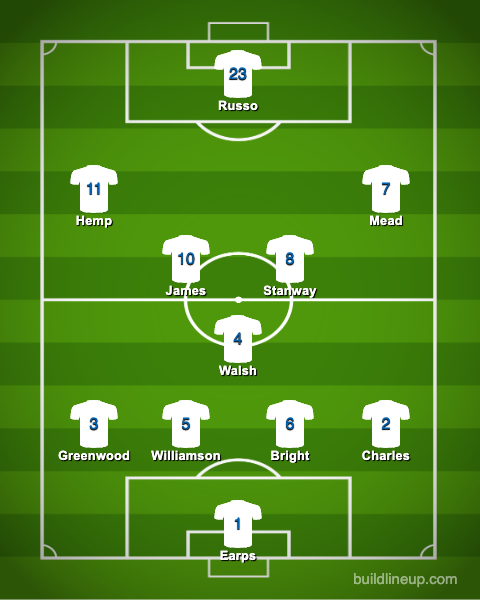
England 2.0 is now in the past, and with both Kirby and Mead having returned and Williamson not too far off, the Lionesses’ evolution will no doubt continue.
So what will the side that will attempt to defend the EURO title in a year and a half — England 3.0, if you will — look like?
The answer is, a lot like England 1.0.
Kirby and Mead will remain key players going forward, and Williamson will doubtlessly slot back into the side once she returns. But make no mistake, England 3.0 will not simply be a carbon copy of their illustrious predecessor.
For one thing, White is long gone, and it is difficult to imagine the Lionesses going to Switzerland with Bronze as their starting right back still.
And for another, a year and a half have passed since that afternoon at Wembley, and the next generation has firmly staked its claim on the post-World Cup Lionesses side.
Hemp has long broken through into the national team, and both Russo and James can say they have done the same after the World Cup. James’ introduction was, of course, necessitated by Kirby’s absence, but she is almost certain to see significant minutes going forward as unfortunately, Kirby’s availability is rarely a given.
The left back question has dogged Wiegman since the EURO and she has seemingly found the answer in Niamh Charles, in top form for Chelsea this season. The James-Charles combination down the left is a familiar one at the West London side and one that Wiegman has replicated, but there are reasons to think that it may not be set in stone.
It is only a matter of time before James is given the 10 role as well as the shirt for club and country and in the likely event that Hemp returns to the left, the presence of Charles at left back will become somewhat redundant.
Indeed, it is just as likely that Charles will start for England on the right, stepping into Bronze’s role as the flying full back to allow Mead to once again come inside and play as the second striker.
Greenwood had been the original answer to the left back question, and it is likely that she will be moved back there once Williamson returns.
Russo’s place in the starting eleven is less settled given the plethora of competition, but as Wiegman places a premium on her center forward’s ability to link up play and that Daly will be 33 by 2025, the Arsenal forward will more likely than not lead the line for England’s title defense.
There have been more difficult than good times since the EURO, but one should take care to remember that Wiegman has proven her mettle many times and tackled the many challenges thrown her way as well as can be expected.
This team has demonstrated remarkable adaptability and resilience in the face of adversity, and with the long-term absentees returning and talented young players breaking through, there is plenty of cause for optimism.
If you enjoyed this, please subscribe and follow me on Twitter @lucey_footy.
¹Carney, Karen. “Chelsea’s Lauren James Shows How Giving Promising Young Players Time Can Pay off.” The Guardian, March 2, 2023. https://www.theguardian.com/football/2023/mar/02/chelsea-lauren-james-shows-how-giving-young-players-time-can-pay-off.
²“Hayes on Staying Calm with New Star James and Smiling for Chelsea Legend Spence.” Chelsea FC.com, November 19, 2022. https://www.chelseafc.com/en/news/article/hayes-on-staying-calm-with-new-star-james-and-smiling-for-chelsea-legend.